
How to take notes on history books you will use again
Useful notes on a history book preserve the author’s argument, the evidence offered for it, and the questions you still have. Keep a page or chapter reference beside each important point. Write a short summary in your own words after reading, then check it against the text so your notes do not silently change the claim.
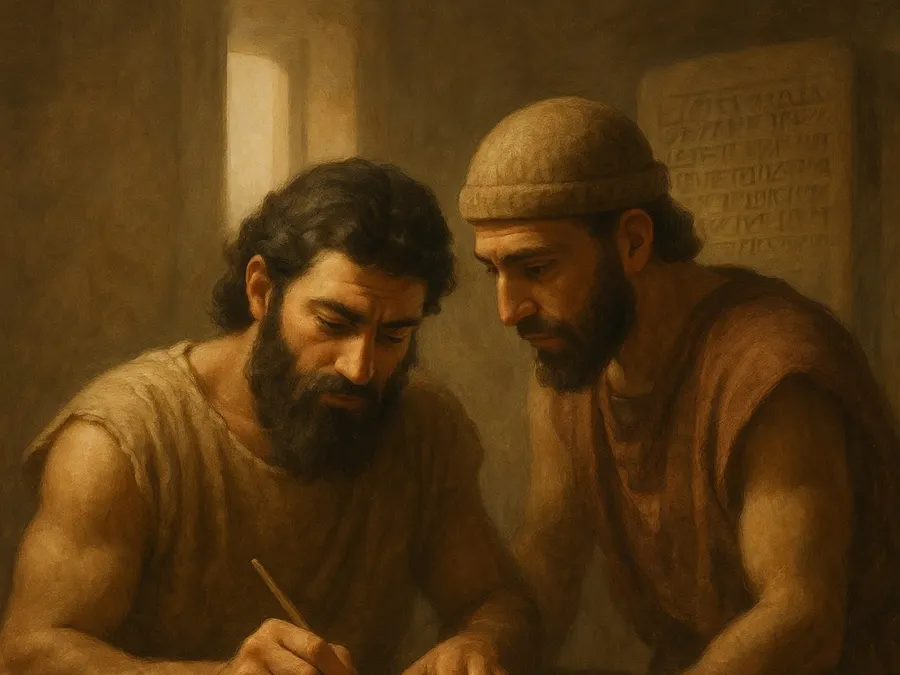
Decide what the note is for
A page full of highlights can show what caught your attention without showing why it mattered. Before reading, decide what you want the notes to help you do: explain a turning point, compare interpretations, or find a source again. That purpose determines what belongs on the page.
Record the book’s author, title and edition once at the top of your notebook or document. Page numbers can differ between editions. For an ebook without stable pages, record a chapter heading and location if available. For an audiobook, use a chapter and timestamp.
You do not need a specialized app. A paper notebook or plain document is enough for the method below. If you need a broader routine first, see relearning history as an adult.
Keep argument, evidence and response separate
Use one note for a chapter or a question, depending on the book. Write the author’s position before writing your reaction. Otherwise, a later reader—including your future self—may mistake your objection for something the author actually said.
Cornell’s Cornell Learning Strategies Center: Cornell Note Taking System organizes notes around a note area, questions and a summary. The template here is our adaptation for historical reading; it is not an official Cornell history worksheet. Use only the fields that help your purpose.
Make quotation boundaries unmistakable
Put copied language in quotation marks immediately and preserve its location. For a paraphrase, rewrite the idea rather than swapping a few words, and still record the source. If the author quotes someone else, note that you encountered the quotation through this book.
“The author cites a diary” is different from “I read the diary.” A footnote can lead you to the original, but it does not establish that you have checked it. If a source is inaccessible, say so in your note instead of filling the gap with confidence.
When you do inspect an original source, the Library of Congress: Primary Source Analysis Tool can help you separate observations, reflections and unanswered questions. Keep those distinctions in your notes too.
Turn a highlight into a question
Imagine a chapter argues that several conditions contributed to a political crisis. This is an illustrative reading exercise, not a claim about a particular event. A weak note would say “crisis had many causes.” A useful note names the author’s proposed conditions, records the supporting passage, and asks which connection needs more evidence.
Next, write: “The author treats this as a background condition, not the immediate trigger.” That distinction helps you preserve the argument. If the chapter does not make the distinction, frame it as your own question rather than attributing it to the author.
The American Historical Association: Why Study History? (1998) discusses assessing interpretations and evidence. Organizing notes around those tasks gives you something more reusable than a list of isolated dates.
End with a summary you can correct
Close the book and summarize the chapter briefly. Reopen it to check where you oversimplified, confused people or made the argument stronger than the author did. Leave an uncertainty visible if the text does not resolve it.
When you return, read that summary and your next question before adding new material. For recall-focused exercises, see remembering history facts and dates. For comparing places, use the parallel world-history reading method.
You can keep the same kind of note after a Histia story: one explanation, one detail to verify, and one next question. Keep these notes in your own notebook or document; this method does not require an in-app note-taking feature.
Sources & editorial notes
Checked . The exercises are editorial suggestions, not a tested curriculum. The sources below support the historical-reading methods discussed here.
- Cornell Learning Strategies Center: Cornell Note Taking System
- Library of Congress: Primary Source Analysis Tool
- American Historical Association: Why Study History? (1998)
Found an error? Send a correction or read our editorial standards.
Follow your curiosity into a story
Explore short narrated history stories in Histia for iPhone and iPad. Free to download, with optional in-app purchases.
Explore Histia