
How to check whether a history video is reliable
To check a history video, isolate one important claim and trace it to an identifiable source. Examine who created that source, when it was made, and whether it supports the claim as stated. Compare an independent account and keep uncertainty visible. Production quality, popularity and a confident narrator cannot do those checks for you.
Start with the claim that changes the story
You rarely need to investigate every sentence at once. Start with the claim carrying the explanation: a supposed motive, a decisive cause, a surprising quotation, or an assertion that other historians are hiding something. Write it down as precisely as possible, including words such as “only,” “first” and “certainly.”
Check the description, pinned comment or accompanying article for sources. A list of books is a starting point; a page, chapter or document reference makes the connection easier to inspect. If the trail ends at another unsourced video, the original claim remains unverified.
Our reading-note template can hold the claim, its source and the result of your check. You do not have to decide whether the creator’s entire channel is good or bad.
Ask what the evidence can establish
A source can be authentic and still have limits. A speech tells you what someone publicly said; it does not automatically reveal their private motive. A later account can preserve useful information while being distant from the event it describes.
The Library of Congress: Primary Source Analysis Tool separates observation, reflection and questions. Apply that distinction to the object or passage shown on screen. What is actually present? What meaning has the presenter added? What background would you need before accepting that interpretation?
These labels are a practical note-taking aid, not a numerical reliability score. “Unverified” means you have not established the claim; it is not another word for “false.”
Check that your second source is independent
Several pages repeating the same anecdote may all depend on one earlier account. Look at their citations. If they lead to the same origin, you have found repetition, not several separate witnesses. You may need an account that examines the original evidence and its limitations.
The American Historical Association: Why Study History? (1998) discusses the evaluation of conflicting interpretations. Disagreement can concern what happened, why it happened, or what a source means. Identify which disagreement you are looking at before choosing between conclusions.
Museum material can offer a useful cross-check for objects and their context. The Metropolitan Museum of Art’s Heilbrunn Timeline connects essays and chronologies to its collection. An attractive image shown in a video should still have a provenance appropriate to the claim it illustrates.

Separate the scene from the historical record
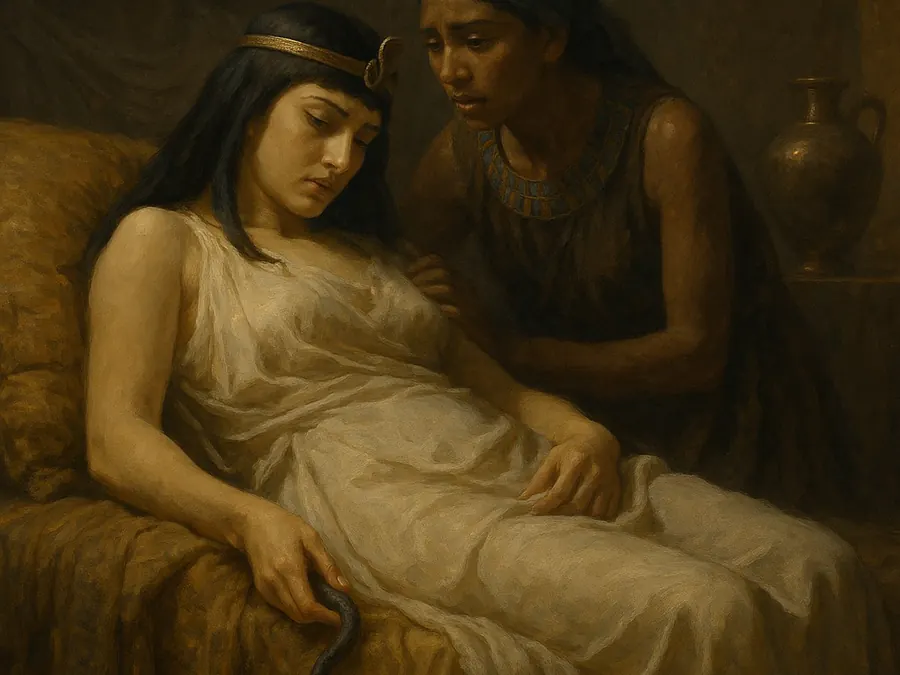
A reenactment, animation or generated image can illustrate a possibility. It cannot establish that the depicted clothing, dialogue or expression was documented. Ask whether the video identifies reconstructions and distinguishes surviving evidence from imagined detail.
AI narration alone does not prove or disprove a historical claim. Apply the same checks to human narration: traceable evidence, faithful representation and visible uncertainty. A polished scene can make an account easy to follow while leaving its sources weak.
For an example of how uncertainty should remain visible, read our guide to Cleopatra’s death, which separates later accounts from certainty about the details.
Decide what to do with an unresolved claim
If the evidence is unclear, save the question, find a better introduction, or avoid repeating the claim as settled fact. You can still enjoy a story while being precise about what you have checked.
Apply this standard to Histia too. Our stories use a cinematic format; presentation is not independent historical evidence. Follow source-linked reading and our editorial standards and correction process when a detail matters. For rebuilding context before checking a difficult topic, start with our adult learning guide.
Sources & editorial notes
Checked . The exercises are editorial suggestions, not a tested curriculum. The sources below support the historical-reading methods discussed here.
- Library of Congress: Primary Source Analysis Tool
- American Historical Association: Why Study History? (1998)
- Metropolitan Museum of Art’s Heilbrunn Timeline
Found an error? Send a correction or read our editorial standards.
Follow your curiosity into a story
Explore short narrated history stories in Histia for iPhone and iPad. Free to download, with optional in-app purchases.
Explore Histia