Interactive world history timeline
5,000 years of world history. One scroll.
69 turning points, from the first clay tablets of Sumer to 9/11, in seven chapters. Each one takes a few seconds to read, and 43 open a full explainer with its sources.
Time, to scale
Cleopatra lived closer to the Moon landing than to the Great Pyramid.
Each dot is one of the 69 turning points, stacked in the century its date begins. Older eras weren't quieter: fewer of their events were written down, and fewer can be pinned to a single year.
- turning points in the first 2,600 years
- 5
- turning points in the last 250 years
- 31
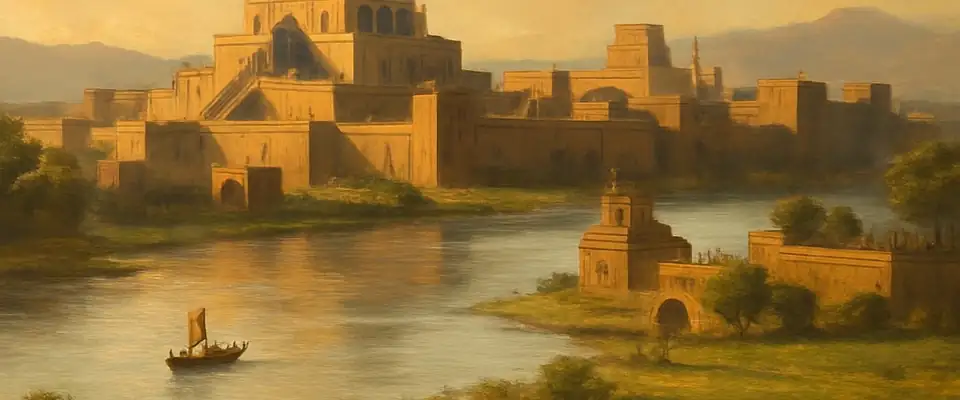
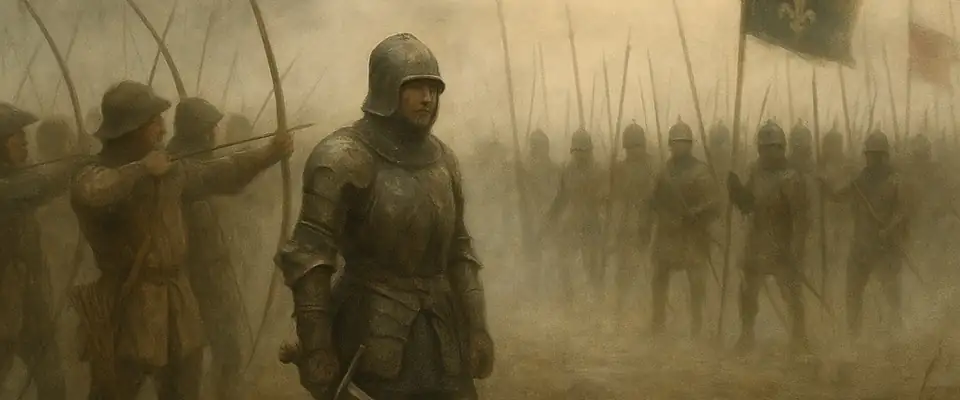
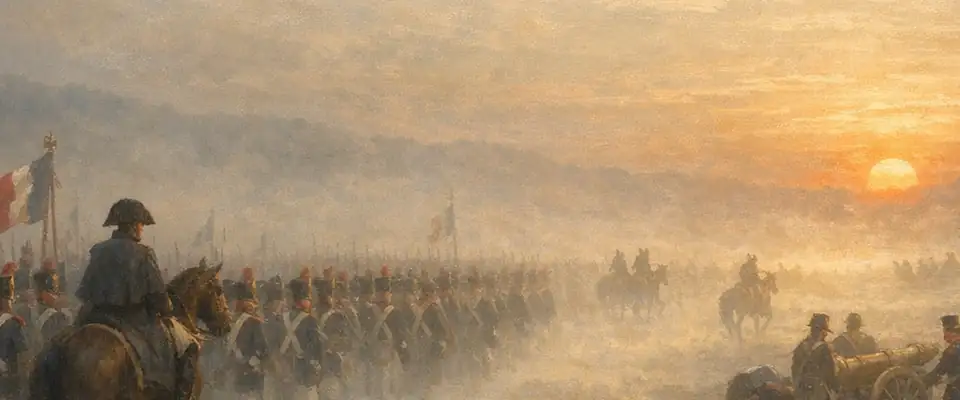
Cards with an arrow open a sourced explainer. Pictures are Histia app illustrations: artistic interpretations, not archival images.
Chapter 01 · c. 3200 – 1046 BCE
The ancient world
Writing, pharaohs, the pyramids and the first written laws.
5 turning pointsabout 2,150 years
-
c. 3200 BCE
Mesopotamia
Event: Writing is invented in Sumer
Cuneiform on clay tablets begins as accounting — and ends up preserving the first literature.
-
c. 3100 BCE
Egypt
Period: Upper and Lower Egypt are unified
The Nile valley becomes a single kingdom, beginning three millennia of pharaonic rule.
-
c. 2560 BCE
Egypt
Event: The Great Pyramid of Giza is completed
Paid crews raise 2.3 million blocks — the tallest structure on Earth for 3,800 years.
Read the explainer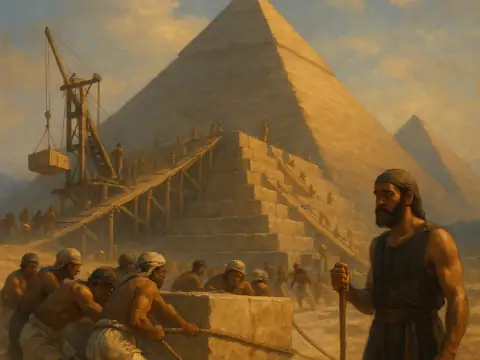
-
c. 1792–1750 BCE
Mesopotamia
Event: Hammurabi codifies Babylonian law
One of the earliest surviving legal codes, carved on a basalt stele for all to see.
-
c. 1600–1046 BCE
East Asia
Period: The Shang dynasty rules the Yellow River
China's first dynasty confirmed by archaeology, and the origin of Chinese writing.
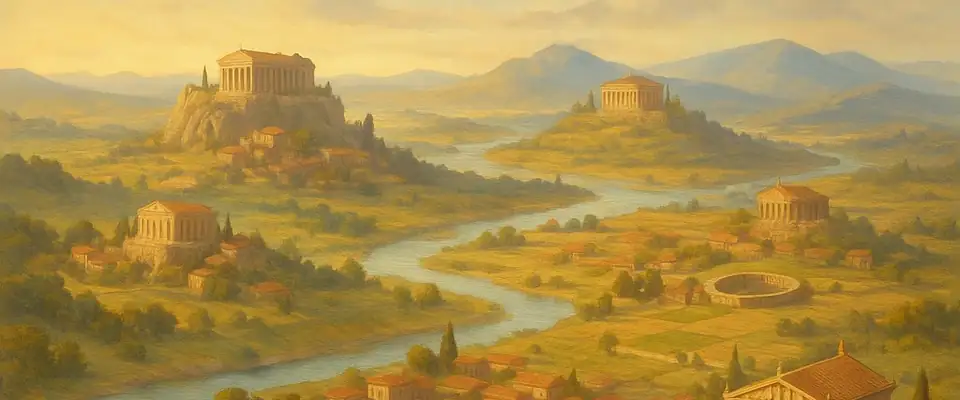
Chapter 02 · 551 BCE – 476 CE
Classical antiquity
Philosophers and the first democracy, then the empires of Alexander, Han China and Rome.
12 turning points1,026 years
-
551–479 BCE
East Asia
Person: Confucius teaches in a fracturing China
A minor official's ideas on duty and virtue outlast every kingdom of his era.
Read the explainer -
508 BCE
Greece
Event: Athens invents democracy
Cleisthenes' reforms hand political power to citizen assemblies for the first time.
-
490 BCE
Greece
Conflict: The Battle of Marathon
Outnumbered Athenians stop a Persian invasion — and a runner's 42 km becomes legend.
Read the explainer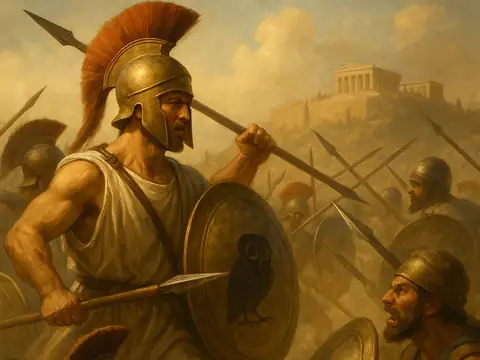
-
461–429 BCE
Greece
Person: Pericles leads Athens at its height
The Parthenon rises; so does the rivalry that will destroy the Greek world.
-
431–404 BCE
Greece
Conflict: The Peloponnesian War
Athens and Sparta bleed each other for 27 years; Greece never fully recovers.
-
336–323 BCE
Greece
Person: Alexander conquers the Persian Empire
Thirteen years, three continents, no personal defeat — then death at 32 in Babylon.
Read the explainer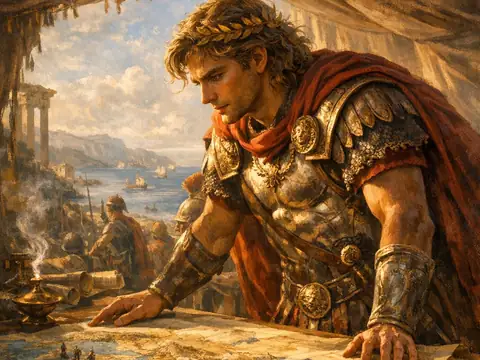
-
264–146 BCE
Mediterranean
Conflict: Rome and Carthage fight the Punic Wars
Three wars, Hannibal's elephants over the Alps, and the total erasure of Carthage.
-
206 BCE – 220 CE
East Asia
Period: The Han dynasty opens the Silk Road
Chinese silk reaches Rome; ideas, religions and diseases travel the other way.
Read the explainer -
15 March 44 BCE
Italy
Event: Julius Caesar is assassinated
Sixty senators, 23 wounds — a plot to save the Republic that created the Empire.
Read the explainer -
30 BCE
Egypt
Person: Cleopatra dies and Egypt becomes Roman
The last pharaoh chooses death over Octavian's triumph; 300 years of Ptolemies end.
Read the explainer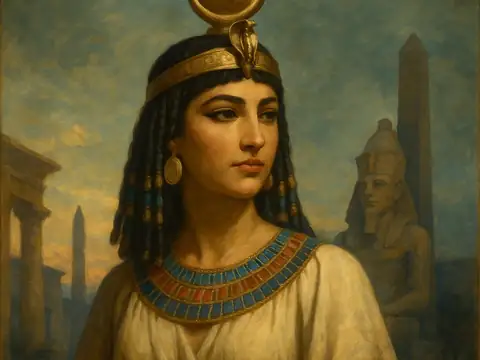
-
27 BCE – 476 CE
Italy
Period: The Roman Empire
Augustus ends the Republic; Rome rules the Mediterranean world for five centuries.
-
4 September 476 CE
Italy
Event: The Western Roman Empire falls
Odoacer deposes the last emperor — quietly. The East survives another thousand years.
Read the explainer
Chapter 03 · 8th century – 1453
The Middle Ages
Baghdad's scholars, Charlemagne's crown, the Mongol conquests and the Hundred Years' War.
7 turning pointsabout 700 years
-
8th–13th century
Middle East
Period: The Islamic Golden Age
Baghdad's House of Wisdom preserves and advances Greek science, algebra and medicine.
-
25 December 800
Europe
Person: Charlemagne is crowned emperor
A Frankish king is made 'Emperor of the Romans' — Europe reimagines itself.
Read the explainer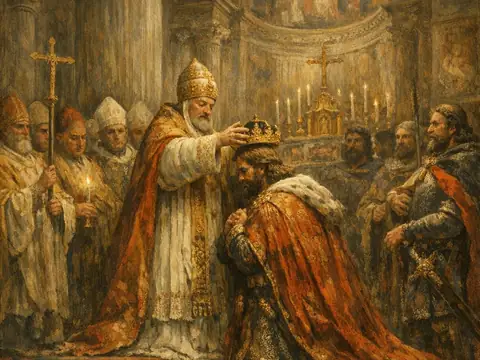
-
1206–1227
Central Asia
Person: Genghis Khan unites the Mongols
From abandoned child to founder of the largest contiguous land empire in history.
Read the explainer -
15 June 1215
Britain
Event: The Magna Carta is sealed
English barons force King John to accept that the king is not above the law.
Read the explainer -
1337–1453
France
Conflict: The Hundred Years' War
England and France fight for 116 years over a disputed French crown.
Read the explainer -
25 October 1415
France
Conflict: Henry V wins at Agincourt
English longbowmen destroy a far larger French army in a muddy field.
-
1429–1431
France
Person: Joan of Arc turns the Hundred Years' War
An illiterate 17-year-old breaks the siege of Orléans, crowns a king, and burns at 19.
Read the explainer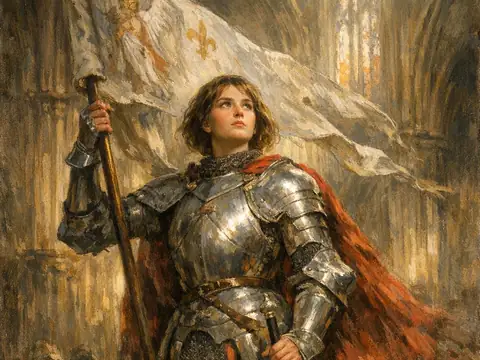
Chapter 04 · 14th – 17th century
The Renaissance
The printing press, and Italian artists who rediscover the ancient world and remake art.
4 turning pointsabout 300 years
-
c. 1440–1455
Europe
Event: Gutenberg builds the printing press
Books stop being copied by hand — and Europe's information economy is rebuilt.
Read the explainer -
14th–17th century
Italy
Period: The Renaissance
Florence, then Europe, rediscovers classical learning and reinvents art.
Read the explainer -
1452–1519
Italy
Person: Leonardo da Vinci
Painter, anatomist, engineer — the definitive case that curiosity is a discipline.
Read the explainer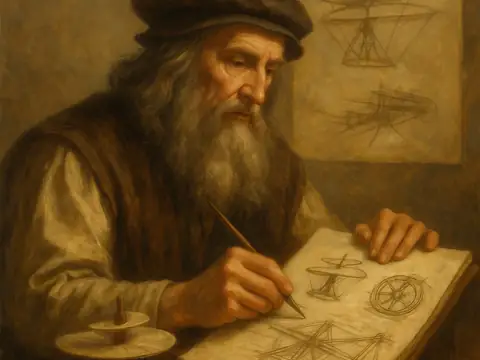
-
1475–1564
Italy
Person: Michelangelo
The Sistine ceiling, the David, and a temper to match the talent.
Chapter 05 · 15th – 18th century
The early modern world
Ocean voyages, the Reformation, Tudor queens, Galileo and the Enlightenment.
8 turning pointsabout 350 years
-
12 October 1492
America
Event: Columbus reaches the Americas
Four voyages open an exchange of crops, people and disease that remakes both worlds.
Read the explainer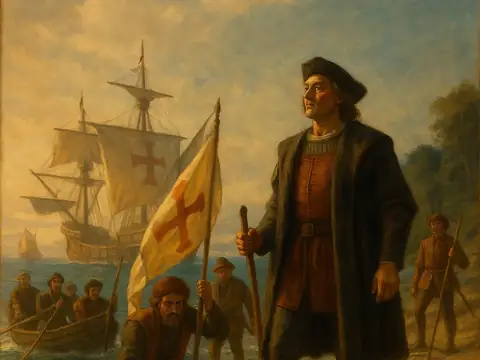
-
15th–17th century
Global
Period: The Age of Exploration
European ships map the oceans, and empires follow the trade routes.
-
31 October 1517
Europe
Event: Martin Luther publishes the 95 Theses
Printed and spread across Europe in two months — the Reformation goes viral.
Read the explainer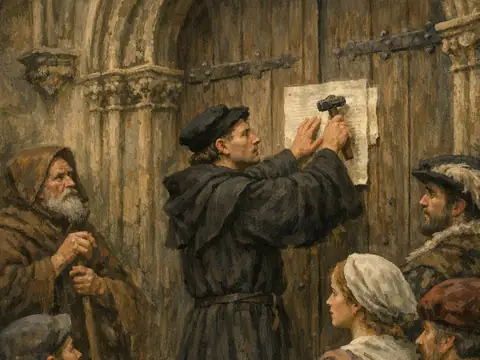
-
19 May 1536
Britain
Person: Anne Boleyn is executed
The queen Henry VIII broke with Rome to marry lasts a thousand days.
Read the explainer -
1558–1603
Britain
Person: Elizabeth I rules England
Forty-five years of survival politics, the Armada, and a golden age of theatre.
Read the explainer -
1564–1642
Italy
Person: Galileo turns a telescope to the sky
Jupiter's moons end the idea that everything orbits the Earth — and put him on trial.
Read the explainer -
1650–1800
Europe
Period: The Enlightenment
Reason, rights and scepticism become political forces, not just philosophy.
Read the explainer -
1760–1840
Britain
Period: The Industrial Revolution
Steam, coal and factories change how humans work more than anything since farming.
Read the explainer
Chapter 06 · 1760 – 1945
Revolutions and world wars
Steam and factories, revolutions and new nations, then two world wars.
21 turning points185 years
-
1762–1796
Russia
Person: Catherine the Great expands Russia
A German princess becomes Russia's longest-reigning empress and a patron of the Enlightenment.
Read the explainer -
1765–1783
America
Conflict: The American colonies revolt
A decade of taxes, troops and broken trust ends in a new republic.
Read the explainer -
4 July 1776
America
Event: The Declaration of Independence
Thirteen colonies put a philosophical argument for revolution on paper.
-
14 July 1789
France
Event: The Bastille is stormed
Parisians seize the fortress after hours of fighting; seven prisoners are freed.
Read the explainer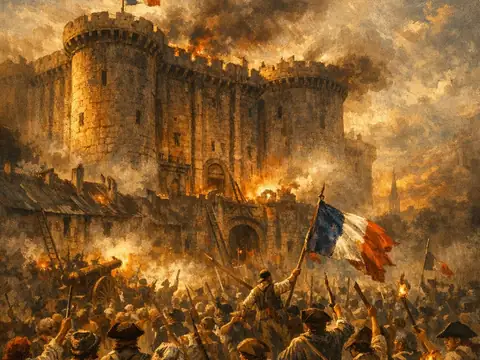
-
1803–1815
France
Conflict: The Napoleonic Wars
One general reorganises Europe by force, and Europe unites to undo it.
-
1814 & 1815
France
Person: Napoleon is exiled — twice
Elba wasn't far enough. After Waterloo, they chose a rock 2,000 km from anywhere.
Read the explainer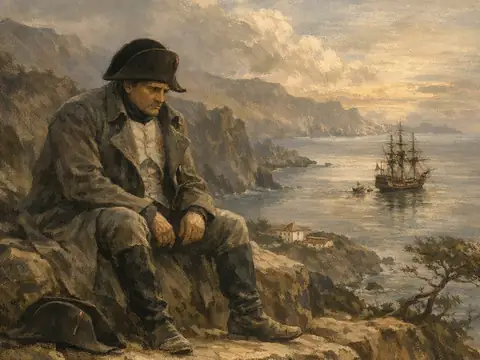
-
1837–1901
Britain
Period: The Victorian era
Empire, railways, reform and deep inequality, all under one long reign.
-
1853–1856
Russia
Conflict: The Crimean War
The first war covered by telegraph and photography — and Florence Nightingale's proving ground.
-
1820–1910
Britain
Person: Florence Nightingale reinvents nursing
Statistics, sanitation and stubbornness cut military death rates dramatically.
-
1861–1865
America
Conflict: The American Civil War
Four years, ~620,000–750,000 dead, and the end of slavery in the United States.
Read the explainer -
14 April 1865
America
Person: Abraham Lincoln is assassinated
Five days after the war ends, a famous actor shoots the president at Ford's Theatre.
Read the explainer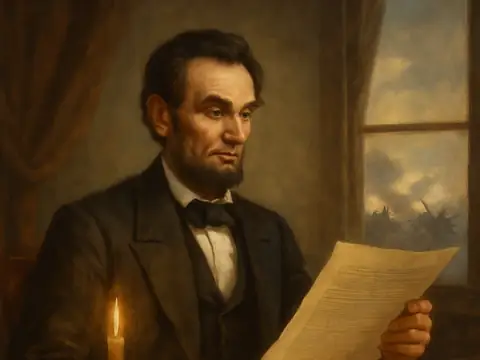
-
1867–1934
Europe
Person: Marie Curie discovers polonium and radium
Two elements, two Nobel Prizes in two sciences — and the radiation that killed her.
Read the explainer -
18 January 1871
Europe
Event: Germany is unified
Bismarck assembles an empire in the Hall of Mirrors — and reshapes the balance of Europe.
-
1879–1955
Europe
Person: Albert Einstein rewrites physics
Four papers in 1905, written by a patent clerk, undo Newton's universe.
Read the explainer -
1914–1918
Europe
Conflict: The First World War
An assassination, a rigid alliance system, and 17 million dead in four years.
Read the explainer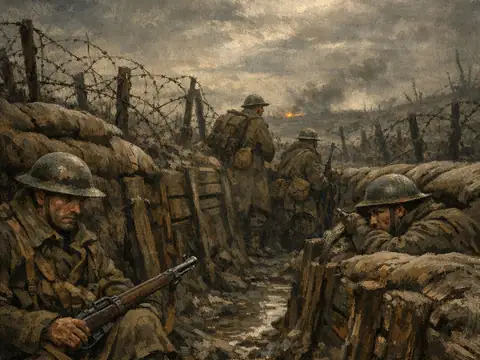
-
1917
Russia
Event: The Russian Revolution
Tsarist Russia collapses; the Bolsheviks build the world's first communist state.
Read the explainer -
1919–1939
Europe
Period: The interwar years
Versailles, the Depression, and the slow normalisation of the unthinkable.
-
1933–1945
America
Person: Franklin D. Roosevelt
The New Deal, four elections won, and America's entry into a world war.
-
1 September 1939
Europe
Conflict: The Second World War begins in Europe
Germany invades Poland; in Asia the war had already been running since 1937.
Read the explainer -
1874–1965
Britain
Person: Winston Churchill
A career of spectacular failures, then the speeches that held Britain together.
Read the explainer -
6 June 1944
Europe
Event: D-Day
156,000 Allied troops cross the Channel to open the Western Front.
Read the explainer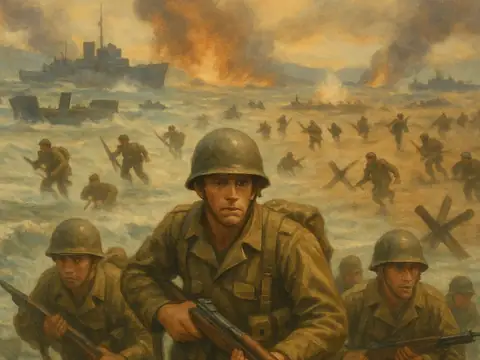
Chapter 07 · 1945 – today
The world since 1945
Decolonisation, the Cold War, civil rights, the Moon landing and the internet.
12 turning points81 years
-
1945–1975
Global
Period: Decolonisation across Africa and Asia
Dozens of new nations emerge as European empires retreat, often violently.
-
1947–1991
Global
Period: The Cold War
Two superpowers, 60,000 warheads, and 45 years of never fighting each other directly.
Read the explainer -
1950–1953
East Asia
Conflict: The Korean War
A proxy war that ended in stalemate — and never in a peace treaty.
Read the explainer -
1 December 1955
America
Person: Rosa Parks refuses to move
A trained NAACP activist triggers a 381-day boycott that breaks bus segregation.
Read the explainer -
1955–1975
East Asia
Conflict: The Vietnam War
A Cold War proxy conflict that reshaped American politics and cost millions of lives.
Read the explainer -
1962–1990
Africa
Person: Nelson Mandela's 27 years in prison
Rivonia, Robben Island, refused release — then president four years after walking out.
Read the explainer -
20 July 1969
Global
Event: Apollo 11 lands on the Moon
Armstrong lands with seconds of fuel left — and leaves mirrors we still use today.
Read the explainer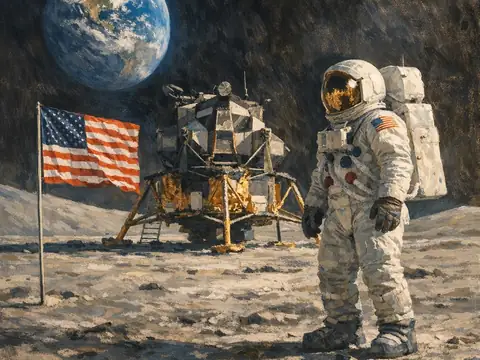
-
1970s–today
Global
Period: The Digital Age
Microprocessors, the internet and smartphones compress distance and attention alike.
-
9 November 1989
Europe
Event: The Berlin Wall falls
A bungled press conference opens the most fortified border in Europe. No shots fired.
Read the explainer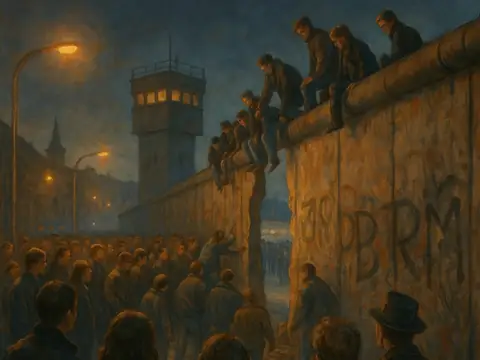
-
1990–1991
Middle East
Conflict: The Gulf War
A coalition of 35 nations reverses Iraq's invasion of Kuwait in six weeks.
-
born 1997
Middle East
Person: Malala Yousafzai
Shot for going to school at 15; the youngest Nobel Peace Prize laureate at 17.
-
11 September 2001
America
Event: The 9/11 attacks
Nearly 3,000 people killed in a single morning; two decades of war follow.
2026
You are here.
About 5,200 years after the first clay tablets, crossed in one scroll.
No entries match that filter.
For teachers and writers
Free to use in class, on your site or in your slides.
The timeline is licensed CC BY 4.0. Embed it, quote it or share it, as long as you credit Histia with a link.
- No account, no sign-up
- One copy-paste to embed, credit line included
- 43 entries link to an explainer with its sources
- Every entry has its own link, e.g. #the-berlin-wall-falls
Embed it
Paste this into your page. It loads a compact view without our menus and keeps the credit line CC BY asks for.
<iframe src="https://histiaapp.com/timeline/?embed=1" width="100%" height="640" style="border:1px solid #ddd;border-radius:12px" loading="lazy" title="Interactive World History Timeline by Histia"></iframe>
<p style="font-size:14px"><a href="https://histiaapp.com/timeline/">Interactive World History Timeline</a> by Histia, CC BY 4.0</p>
Cite it
- APASouef, W. (2026). Interactive World History Timeline (3000 BCE – Today). Histia. https://histiaapp.com/timeline/
- MLASouef, William. "Interactive World History Timeline (3000 BCE – Today)." Histia, 23 Sept. 2026, https://histiaapp.com/timeline/.
- ChicagoSouef, William. "Interactive World History Timeline (3000 BCE – Today)." Histia. Last modified September 23, 2026. https://histiaapp.com/timeline/.
Go deeper
- History Library47 plain-English explainersEach answer comes with its sources and flags what historians still debate.
- Side by sideAncient civilizations timelineMesopotamia, Egypt, the Indus, China and the Americas, compared by date and region.
- MethodHow these entries are researchedSources, evidence labels and how corrections are handled.
Hear the stories behind the dots.
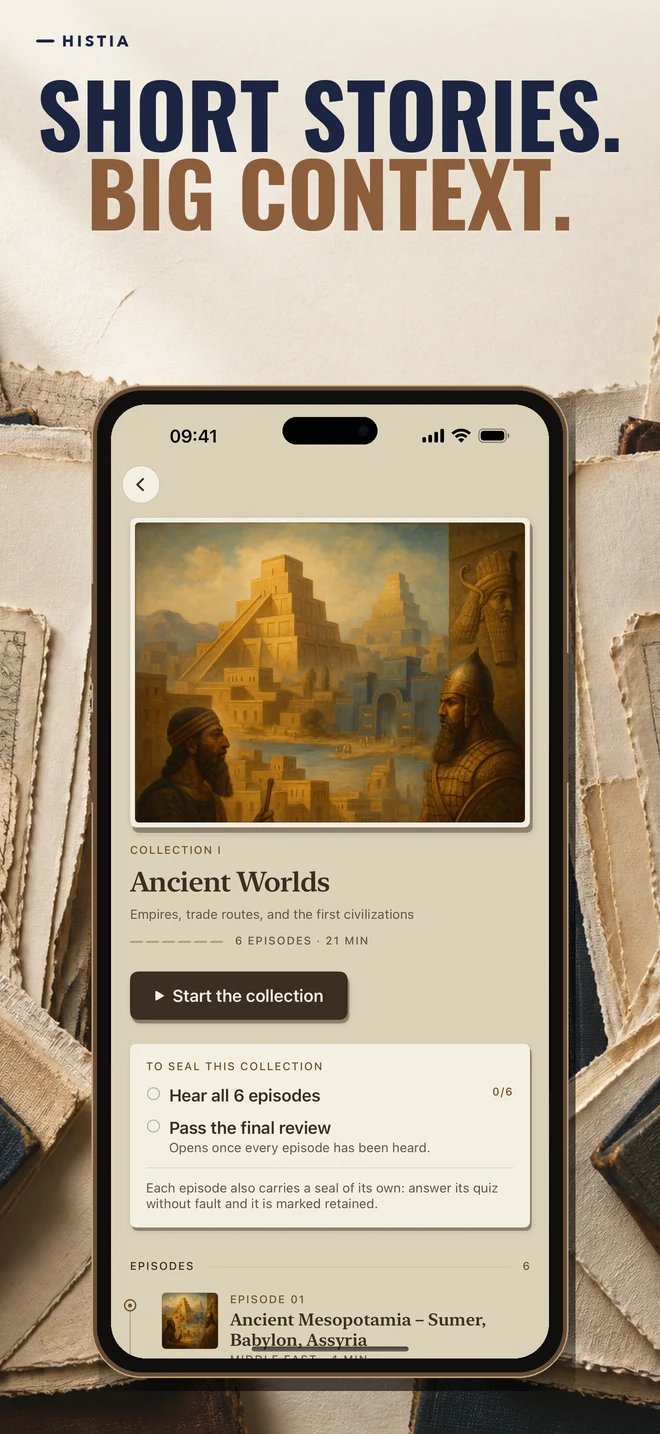
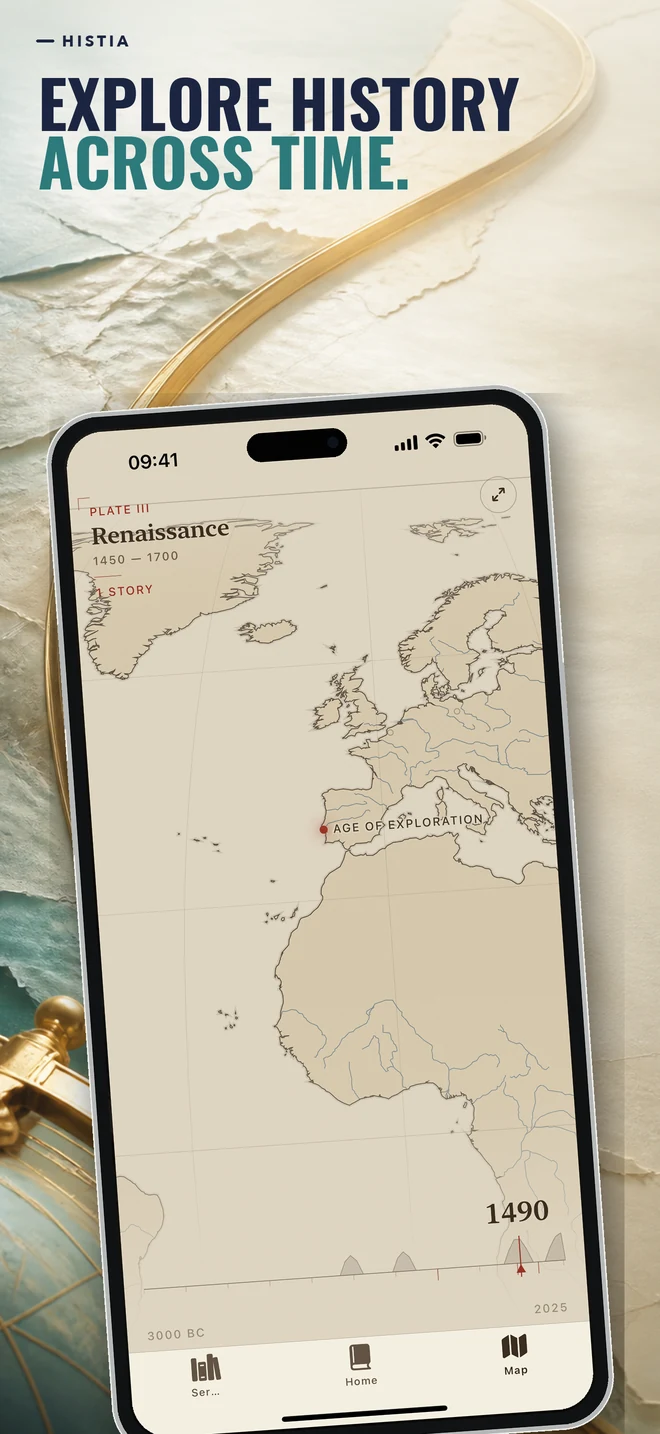
Histia turns moments like these into five-minute narrated stories, with a quiz after each and a map that runs from 3000 BCE to 2025.
Download Free on the App StoreFree to download · Optional in-app purchases · iPhone & iPad · iOS 18+