Story format
Short history stories you can finish in 5 minutes
Here are three complete short history stories, not just recommendations: how clay tablets helped turn memory into a record, why Zhang Qian did not set out to create the Silk Roads, and why landing was only half of Apollo 11's challenge. Each is based on an institutional source, followed by one line to remember and a recall check.
What you will understand
- why some of the earliest surviving writing recorded ordinary distributions rather than epic literature;
- how a failed diplomatic mission helped connect Han China more closely with Central Asia;
- why Apollo 11's safe return mattered as much as the famous first step.
1. The clay record that outlived its transaction
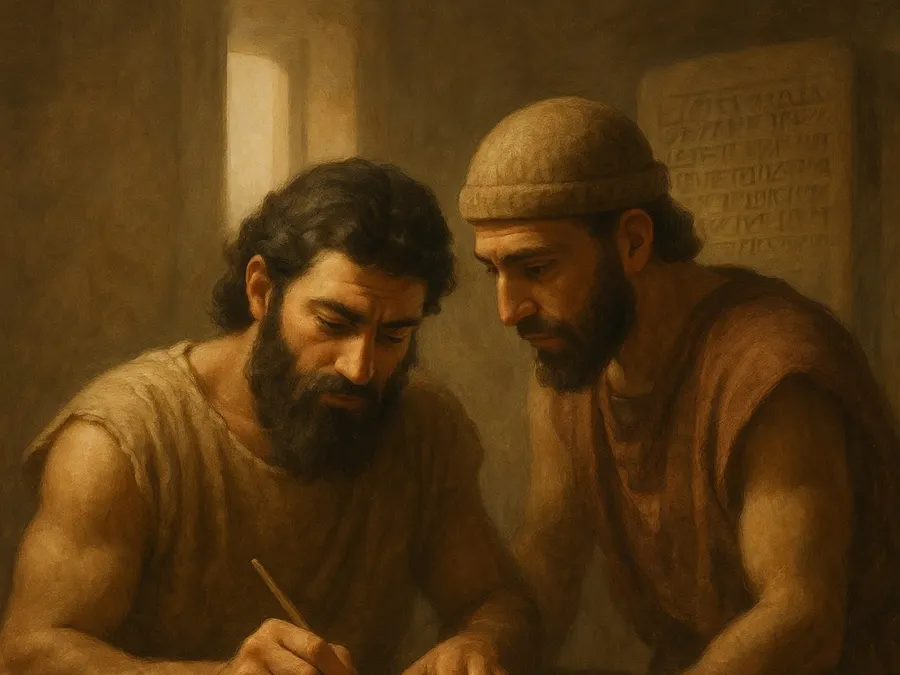
Before writing preserved royal speeches or poems, it helped administrators count. In southern Mesopotamia before 3200 BCE, people began using signs to record goods and rations. A reed pressed into damp clay made marks that later developed into the wedge-shaped system now called cuneiform. Cuneiform was not one language: it was a way of writing used for several languages over a very long period.1
A Metropolitan Museum tablet dated to roughly 3100–2900 BCE appears to record grain distribution. Its subject is ordinary, but that is the point. A spoken allocation disappears when the speakers leave; a clay record can be checked, stored and, once dried, survive the transaction that created it. Writing changed more than storytelling. It changed what an institution could remember.2
Remember: some of the earliest writing survived because administration needed a memory outside the human mind.
2. The diplomat who did not set out to build a trade route
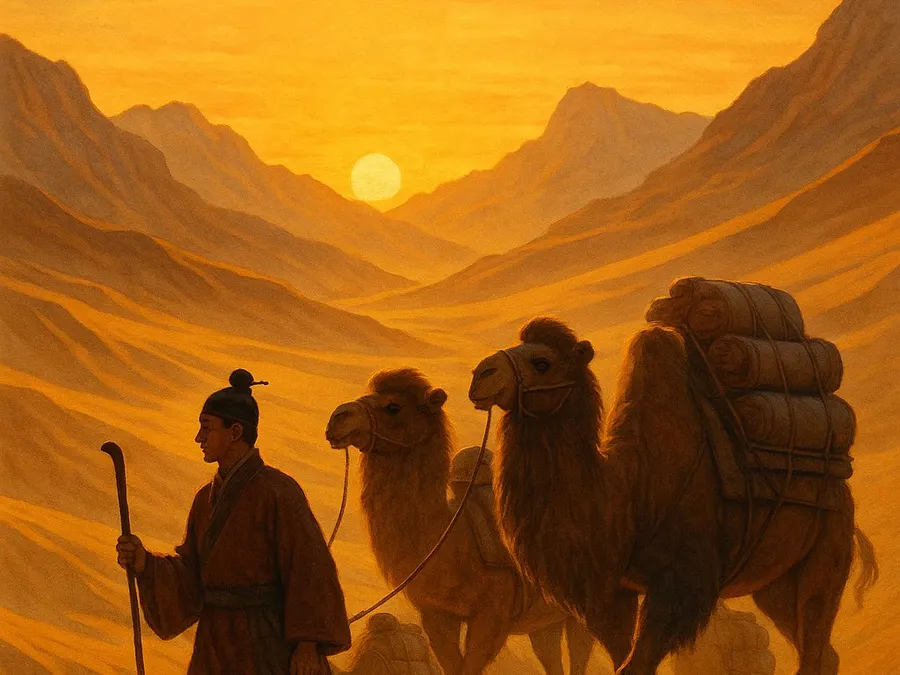
In 139 BCE, the Han emperor Wudi sent the official Zhang Qian west to seek an alliance against the Xiongnu. The mission did not go to plan: Zhang Qian was captured and only returned to the Han court thirteen years later. Yet the knowledge he brought back about Central Asian peoples, states and routes gave the court information it had not possessed before.3
Later embassies and exchanges helped strengthen connections between China and Central Asia. But Zhang Qian did not draw a single road from China to Rome, and he did not invent trade across Eurasia. The term Silk Roads describes overlapping routes used by many societies across centuries. His mission became one milestone in that much larger network—not its lone beginning. You can explore that wider context in our guide to what the Silk Road actually was.4
Remember: Zhang Qian travelled for diplomacy; the connections his reports supported became bigger than his original mission.
3. The Moon landing that still had to come home
Apollo 11 launched on July 16, 1969. Four days later, Neil Armstrong and Buzz Aldrin landed the lunar module Eagle on the Moon while Michael Collins remained in lunar orbit aboard the command module. The first step became the image remembered around the world, but NASA's mission objective included something less photogenic and equally essential: returning the crew safely to Earth.5
After their surface work, Armstrong and Aldrin had to lift off from the Moon, reunite with Collins in orbit, transfer back into the command module and begin the journey home. The crew splashed down in the Pacific on July 24. The story is therefore not simply “humans reached the Moon.” It is a chain of launch, navigation, landing, ascent, rendezvous and return in which every later step depended on the earlier ones. For the evidence behind the landing itself, read did we really land on the Moon?6

Remember: Apollo 11 succeeded because the astronauts reached the Moon and completed the chain that brought them home.
Check what you remember
Why was clay useful for early record-keeping?
Marks could be pressed into damp clay and the record could then be stored, checked and preserved beyond the original spoken exchange.
Was Zhang Qian sent west to create the Silk Roads?
No. He was sent on a diplomatic mission to seek an alliance against the Xiongnu. His reports later helped the Han court understand and connect with Central Asia.
What part of Apollo 11 is easy to forget after the landing?
The lunar ascent, rendezvous with Michael Collins, journey back to Earth and safe splashdown were all necessary parts of the mission.
What makes a short history story useful?
A useful short story answers one narrow question, supplies enough context to understand it, separates documented facts from interpretation and makes its boundary visible. It should give you a foothold, not pretend to replace a book, archive, lecture or specialist study.
Continue with a short story in Histia
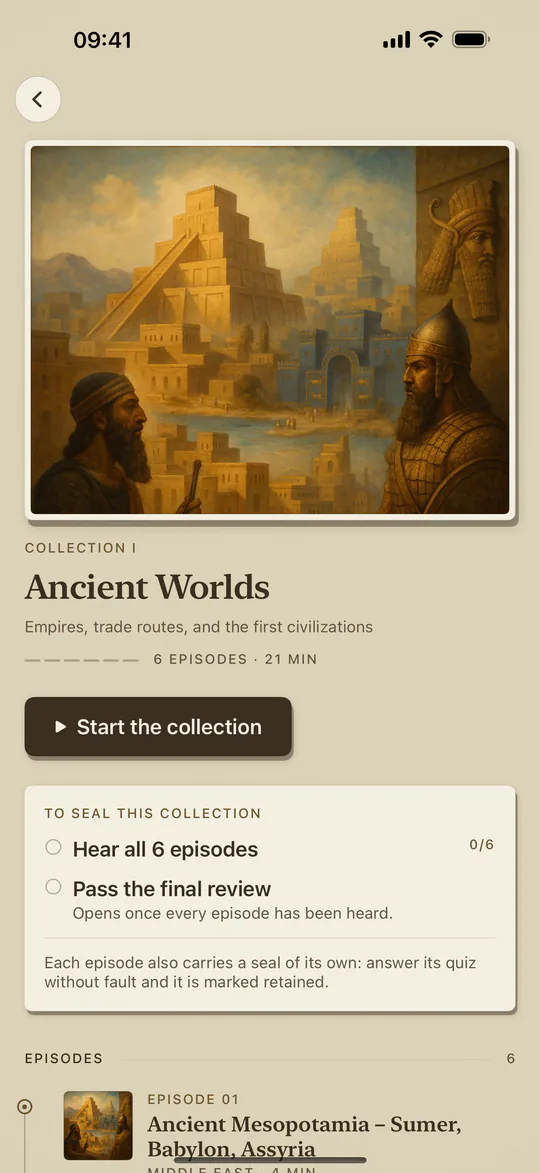
Histia combines narrated stories with synchronized text and, on most published stories, a short quiz round. It is free to download for iPhone and iPad (iOS 18+), with optional in-app purchases.
Try one story in HistiaCan short history stories replace books or longer sources?
No. Brevity necessarily removes detail. Use a short story to identify the people, sequence and central question; use longer sources when you need the evidence, historiography or consequences in depth.
Sources and verification
- British Museum — “How to write cuneiform”: origin, clay-and-reed method and the distinction between a script and a language.
- The Metropolitan Museum of Art — Proto-cuneiform tablet: date, material and interpretation as a grain-distribution record.
- UNESCO — About the Silk Roads: Zhang Qian's mission, captivity, return and later embassy.
- UNESCO World Heritage Centre — Chang'an–Tianshan Corridor: the corridor's development and Zhang Qian's mission as a milestone.
- NASA — Apollo 11 mission page: launch, crew, landing and return dates.
- NASA — Apollo 11 mission overview: mission objective and sequence.
Historical claims were checked against these institutional pages on August 25, 2026. The three paintings are labeled Histia illustrations and are not presented as primary sources.
Choose your next short history story in Histia
- Use the stories above to find your preference: an invention, a journey, or a turning point. Then browse a matching available topic in Histia.
- Check the running time and choose text or narration for the time you have. You can read along with narrated cinematic playback.
- Follow one question through the episode. Focus on what the people involved wanted, what they did, and what followed.
- Finish at the end of the story. Save it if you want to revisit it, or choose a related story from a themed series on your next visit.
The free stories on this page can stand on their own. Histia adds a narrated, visual format for available app stories; the website and app catalogs are not identical.
Find your next story in Histia
Free to download · Optional in-app purchases · iPhone & iPad · iOS 18+